Beyond the Indian market, businesses note that the European market also holds potential for Vietnamese dragon fruit.
While high-quality dragon fruit costs only about 10,000 VND per kilogram in the regions where it is grown, a single dragon fruit can sell for between 260,000 and 400,000 VND in Europe, depending on its size. However, businesses note that exporting large quantities of this fruit to the EU is no simple task; it requires further improvements to the quality of Vietnamese dragon fruit.
With 10 types of fresh fruit now being exported to the European market, a business representative stated that they have established 100 hectares of dragon fruit cultivation that meets GlobalGAP standards—a prerequisite for introducing dragon fruit into Europe.
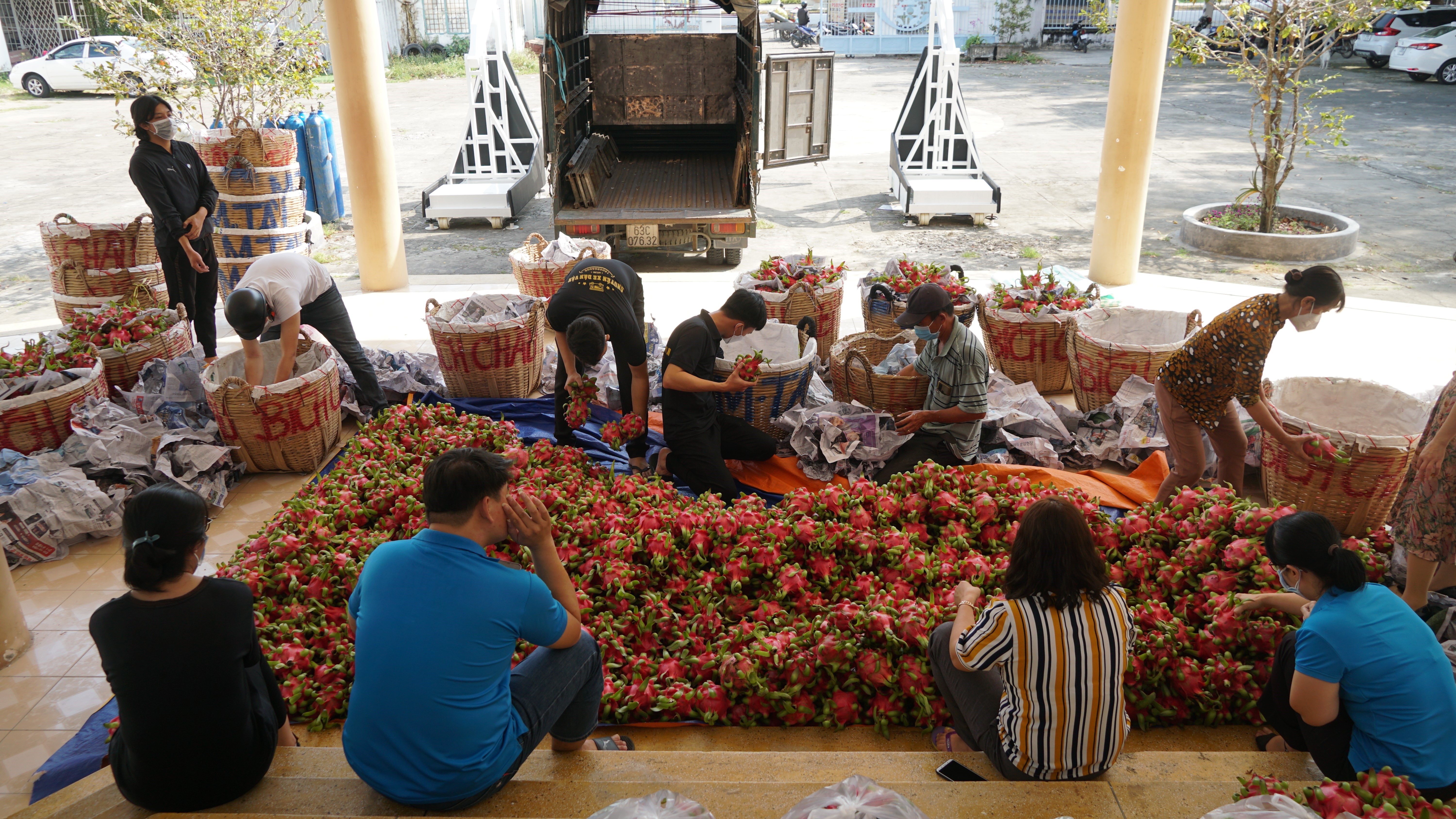
To be exported to the EU, Vietnamese dragon fruit must meet the standards stipulated by this market. (Illustrative photo – Photo: VNA)
“In Europe, nearly every shipment is inspected upon arrival at the airport. Many Vietnamese businesses have faced situations where their goods were inspected, found to contain residues, and subsequently forced to be destroyed. Therefore, we must ensure absolute safety, starting from the cultivation stage in the orchards, by strictly controlling pesticide residues,” says Phan Thu Thuy, Sales Director at Nafoods Northwest JSC.
Furthermore, for Vietnamese dragon fruit to be exported to the EU, it must meet the market’s specific standards, which require testing for at least 510 different active substances. Dragon fruit weighing between 400 and 600 grams per piece, with a red skin covering approximately 70% of the surface, is generally preferred in Europe.
In particular, to move large volumes of dragon fruit into the European market, businesses need to push their products into major local supermarket chains. Achieving this requires having commercial representatives present within that market.
Beyond Europe, there is also significant potential for Vietnamese dragon fruit in South Korea and Japan. However, businesses emphasize that exporting to these markets requires close coordination between growers and exporters, as well as a shift in cultivation practices to meet the necessary standards.
